


CLART SEPTIBAC-48 – CLART SEPTIBAC- Amplification
-
- DESCRIPTION
CLART SeptiBac detects the presence of the following gram-positive, gram-negative bacteria and fungi causing bacteriemia, fungaemia, sepsis or septic shock in positive blood cultures.
- Staphylococcus aureus*
- Staphylococcus epidermidis*
- Staphylococcus hominis*
- Staphylococcus haemolyticus*
- Streptococcus pyogenes/dysgalactiae
- Streptococcus pneumoniae
- Streptococcus mitis
- Streptococcus agalactiae
- Streptococcus sanguinis/parasanguinis
- Streptococcus de grupo milleri (including S. constellatus y S. anginosus).
- Detección genérica para-Streptococcus spp.
- Enterococcus faecium
- Enterococcus faecalis
- Gram positive cocci (CGPs)
- Listeria monocytogenes
- Clostridium perfringens
- Escherichia coli
- Klebsiella pneumoniae
- Klebsiella oxytoca
- Klebsiella spp. (K. pneumoniae, K, oxytoca)
- Salmonella enterica
- Enterobacter cloacae
- Enterobacter aerogenes
- Enterobacter spp. (E. cloacae, E. aerogenes)
- Citrobacter freundii
- Citrobacter spp. (C. freundii, C. koserii)
- Serratia marcescens/plimutica
- Proteus vulgaris/penneri
- Proteus mirabilis
- Proteus spp. (P. vulgaris, P. mirabilis, P. penneri)
- Haemophilus influenzae
- Haemophilus spp. (H. influenzae, H. parainfluenzae)
- Acinetobacter baumanii
- Bacteroides fragilis
- Bacteroides spp. (B. fragilis, B. faecis)
- Pseudomonas spp (P. aeruginosa, P. putida, P. stuartii )
- Stenotrophomonas maltophilia
- Candida albicans
- Candida glabrata
- Candida krusei
- Generic detection for Candida spp. (detection of Candida parapsilosis not included) and fungal taxa.
*Including the detection of mecA region, responsible of the appearance of methicillin resistance in Staphylococci genus.
Detection of the different microorganisms is achieved by PCR amplification of a specific fragment ranging 149-500 bp. size.
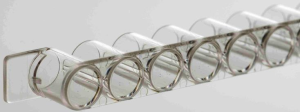
Amplification is performed in three different types of PCR tubes:
Mix 1 tubes are white and allow the amplification and subsequent detection of Gram-positive bacteria, excluding Clostridium perfringens.
Mix 2 tubes are green and contain everything needed for amplification of fungi and Clostridium perfringens.
Mix 3 tubes are blue and contain everything needed for the amplification and subsequent detection of Gram-negative bacteria.
The detection of the product amplified by PCR is carried out by means of a low-density microarray platform: CLART (Clinical Arrays Technology). The platform is based on a very simple principle, but at the same time cost effective. It consists of a microarray printed at the bottom of a microtiter plate, which simplifies the entire hybridization and visualization process when compared to classic microarray systems.
The CLART® SeptiBac detection system is based on the precipitation of an insoluble product in those areas of the microarray where hybridization of amplified products with specific probes occurs. During the PCR, the amplified products are labeled with biotin. After amplification, the products are hybridized to their respective specific probes that are immobilized at specific and known areas of the microarray. These immobilised biotinilated products are recognized by the streptavidin of a streptavidin-peroxidase conjugate, thus providing with peroxidase activity to the hybridised products. Peroxidase activity will then metabolise o-Dianisidine and produce an insoluble product which will precipitate in those places where hybridisation occurred.