


CLART STIs B – 48 – CLART STIs A STIs B- Visualization
- PROTOCOL DESCRIPTION
CLART® STIs B detects the presence microorganisms causing sexually transmitted infections in
clinical samples swabs.
The microorganisms detected are detailed in the list below:
- Ureaplasma urealyticum/parvum
- Mycoplasma hominis
- Candida:
- albicans
- glabrata
- parapsilosis
- krusei
- tropicalis
- guilliermondii
- dubliniensis.
- Treponema pallidum
- Haemophilus ducreyi.
- Herpes Virus types I and II.
Detection is carried out by the specific amplification of each microorganism in the sample, originating a variable fragment between 100 and 550 base pairs.
To avoid false negatives the tube contains an amplification internal control which ensure the correct working of the tube, and a genomic DNA extraction control from the sample which guarantee that genetic material has been isolated during the extraction process.
The detection of the product amplified by PCR is carried out by means of a low-density microarray platform: CLART® (Clinical Arrays Technology). The platform is based on a very simple principle, but at the same time cost effective. It consists in a microarray printed at the bottom of a microtiter plate well, which simplifies the entire hybridization and visualization process when compared to classic microarray systems.
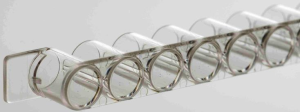
The CLART® STIs B detection system is based on the precipitation of an insoluble product in those microarray areas in which hybridization of amplification products with specific probes takes place. During PCR, amplified products are labelled with biotin. After amplification, these products are hybridized with their respective specific complementary probes that are immobilised in specific and well-known microarray areas. Afterwards they are then incubated with a streptavidine-peroxidase conjugate.
The conjugate is bound through streptavidine with the biotin present in the amplified products (which are bound to their specific probes) and the peroxidase activity prompts the appearance of a non-soluble product in the presence of the o-dianisidine substrate, which precipitates on the microarray areas where hybridization occurs.